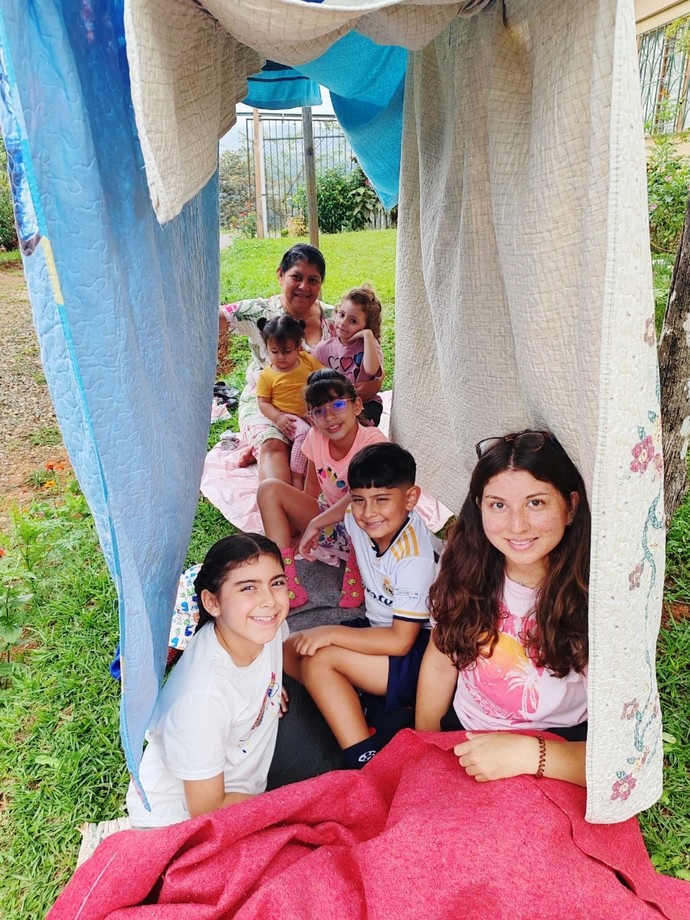
Hannah's Costa Rican experience as part of her gap year at Princeton

Sitting in a kitchen that opens out onto a finca garden filled with trees of banana, coffee, papayas, coconuts and oranges with the Chirripó mountain rolling across the distance, is former A-level student Hannah Freckleton.
Hannah, who was also president of the Students’ Union whilst at college, is staying with a host family in Costa Rica as part of her studies with Princeton University.
She’s on a gap year, teaching English and learning Spanish, not as a tourist, but living in a real Costa Rican home with a family who has welcomed her as part of their own.
Princeton University’s Bridge Year programme, run by their Office of International Programs, also allows Hannah to take part in excursions across the country in a nine-month tuition-free, university sponsored learning experience.
Diving deeper into the Costa Rican community, these excursions and workshops offer an insight into conservation, indigenous communities, sustainable agriculture, ecotourism and the country’s social and political history.
This story shows us what can be achieved by reaching further than our comfort zones might normally allow.

Host Family and Daily Life
I didn’t need to feel completely ready before coming to Costa Rica.”
A lot of daily life happens outdoors. People sit on their porches, share food, chat and greet neighbours passing by. I go for a run and people sitting outside their homes shout hello “Buenas!” or “Pura vida!” which means ‘pure life’ which really reflects the friendly and relaxed mindset here.
My days vary a lot, and plans are often spontaneous. A colleague might invite me for Cafecito (a daily social coffee and tradition), or a friend might invite me to a family gathering. At first, the lack of structure was difficult to adjust to, but now I really enjoy it.
On a typical weekday, I wake up early, have breakfast with my host parents and catch the school bus with the children I work with who often compete over who I should sit next to.
I spend the morning assisting in English classes then I travel to my Spanish lessons in the afternoon. When I get home, cafecito is usually waiting, often with extra family or friends.
Evenings might involve playing with my host family’s grandchildren, going to church, going for a run or joining a mejenga, which is an informal football game, with friends.
What stands out here is how quickly you become a familiar face. Neighbours, shopkeepers and bus drivers greet me and even people I don’t know well, like the butcher I pass each day, stops and says hello.

Weekends
These are a bit slower. I spend time with my host family, meet up with friends, go hiking or swim in pozas, which are natural river pools surrounded by rainforest or we visit new places.
My growing love of Cafecito
One of my favourite daily routines is Cafecito. It’s something everyone seems to pause or, whether at home, at work or elsewhere with family, friends, neighbours or anyone who stops by. It usually involves an afternoon coffee accompanies by bread or a sweet bakery treat. It’s less about the coffee and more about the time set aside to catch up and take a moment to slow down.
Costa Rican cuisine
Food is a huge part of daily life. And meals aren’t rushed. They are a time to sit, talk and be together. Most morning start with gallo pinto, a traditional rice and beans breakfast dish. It sounds simple but every version is slightly different – even my host mum’s changes from day to day.
She also wakes up at 5am to prepare my packed lunch before I leave for the day, which says a lot about how much kindness and care people have.

Living in Costa Rica has shown me that life doesn’t always have to be about doing more or moving faster. It has reminded me to appreciate everyday moments - time spent talking, sharing meals, and being present with people - something I know I’ll carry with me when I leave.”
At Christmas, I helped make tamales - a traditional dish wrapped in banana leaves - with friends and family. We made nearly 200, each of us with a different role: washing the leaves, adding the fillings, wrapping and tying each one. It was a long process, but no one was in a rush - we talked and laughed as we worked. The food tasted amazing, but the experience of making them together felt just as important as the meal.
My Favourite Meal
It’s hard to choose just one meal because there isn’t really one standout - you can tell how much time and effort goes into cooking every meal here. I love a good typical casado for lunch, which is rice, beans, plantain, salad and a choice of meat, with small variations each time. And when I get back from Zumba, my host mum often has a bowl of sopa negra waiting for me – a black bean soup with boiled egg and avocado - which always feels especially welcome after a long day.
A journey of self-discovery
Living life in another language has been a challenge that has taught me to be patient. At the beginning, I often felt awkward or frustrated when I couldn’t express myself properly. Over time, I’ve become more comfortable not always knowing what I’m doing and less worried about making mistakes - learning to laugh at myself became part of the process.
Being away from home has also helped me grow in independence. I’ve learned to figure things out on my own while also recognising how important community and support are - something that feels very visible in Costa Rican culture.

The language barrier and moments of homesickness made the experience challenging at times, and coming here initially felt like a big step into the unknown. Looking back, I can see that those moments pushed me to adapt and grow in ways I wouldn’t have if I’d stayed in my comfort zone. I didn’t need to feel completely ready before coming. A lot of the confidence has come from being here and learning as I go, and most of what I’ve learned has come from being willing to try, even when I felt unsure.”
On reflection
In a community where you’re never truly a stranger for long, as Hannah will prepare to leave the rolling hills and fruit-ladened trees to start her Princeton degree, it’s the people she’ll miss the most and the whole community she has become a part of. She’ll also miss being enveloped by the Spanish language and the pause of cafecito every afternoon.