
Meet some of the mentors behind the making of our skills competition winners
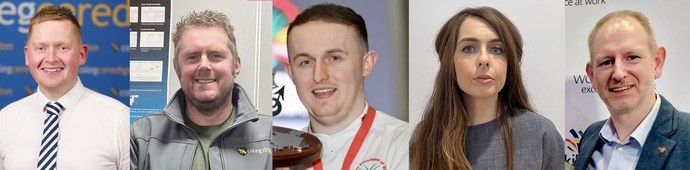
“Some learners who were quiet in class become leaders in the workshop. The transformation is not just in their skills but in their attitude, professionalism and self-belief.” Rhodri Morris, Lecturer in Carpentry.
Skills competitions have been at the helm of vocational skills development at Coleg Sir Gâr and Coleg Ceredigion for a number of years.
We naturally celebrate student success as a result of these competitions but it’s equally important to acknowledge the support that staff freely offer behind the scenes.
In the words of professional cookery and hospitality lecturer, Huw Morgan, who has helped developed students to international competition standards: “The grind, the discipline and the emotional commitment it takes to produce a medal-winning performance – that is what people don’t see.”
Engineering lecturer Karl Hilton, says: “If you’re not giving your best, you’re not giving enough. All I want is for students to enjoy competitions with no pressure to get a medal and they still come back stronger with added maturity.”
We invite you to meet some of the student mentors who work behind the scenes.
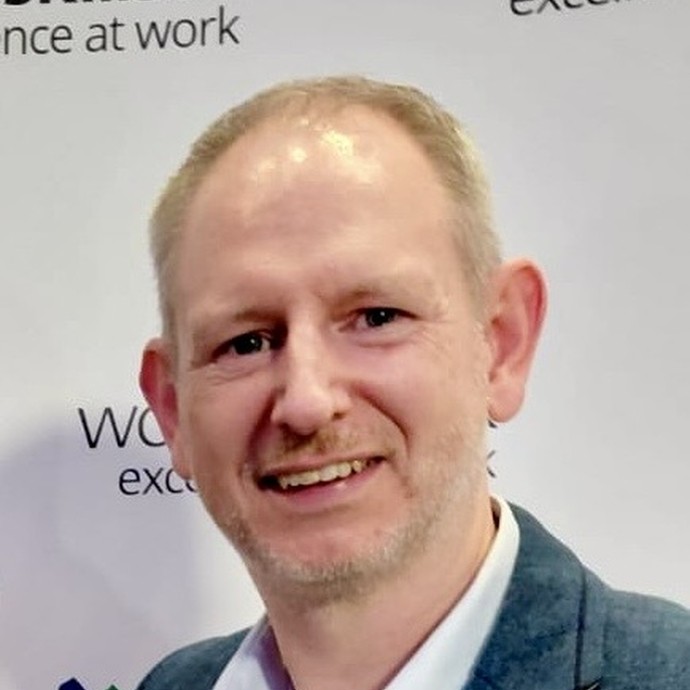
-
![Huw and Sam with students dressed in whites and aprons. This picture was taken at the Senedd.]()
What first drew me into Skills competitions was seeing how powerful they are at pushing learners beyond what they believe they are capable of. I am naturally competitive, and I am a strong believer that competition builds resilience. If you want something you must be prepared to compete for it, an interview, a new job, a competition. In the classroom, you can teach knowledge and you can develop ability, but skills competitions take it to a completely different level — it creates real pressure, real standards, and real professionalism.
Supporting skills competitors also gives me the opportunity to teach aspects of my subject that are not always included in the curriculum for our industry.
The difference with skills competitions is that learners don’t just complete tasks — they strive for excellence. It’s where I see learners go from being students to becoming professionals.
![Three students in grey/smart aprons and ties in front of a restaurant service final sign]()
Can you describe an example of the kind of transformations you’ve seen in students before and after their skills journey?
One of the biggest transformations I regularly see is confidence and resilience. Many learners start their journey unsure of themselves, nervous about pressure, and often doubting whether they belong at the level of competition at all. After going through the Skills journey, they become completely different people.
Their standards rise, their posture changes, their communication improves, and they start holding themselves like professionals. They become more disciplined, more organised, and far more self-aware.
It is not just their skills that improve, it is their identity. They start to believe that they are capable of being the best, and that mindset stays with them long after the competition ends. Our college Training Restaurant, Bwyty Maes y Parc, has also seen the changes. Often, I am told by our regulars, that they are so proud of our students as they have seen them grow from very shy and reserved individuals, to industry professionals. This is not only of the competitors for skills competitions, but of all students who are involved within hospitality and catering. It is the work that we instil naturally within the curriculum that incorporate skills competitions standards.
What is the proudest moment you’ve had that did or didn’t involve a medal?
Of course, medals are fantastic and I am extremely proud of what our learners have achieved, but my proudest moments often come outside of the medal ceremonies. One moment that stands out for me is seeing a learner who didn’t have the best of time at school, lacking confidence - steadily gain experience and resilience to be able to compete in a high-pressure environment and perform like they belong there, staying calm, staying focused, and proving to themselves that they are capable.
Watching that realisation happen in real time is priceless. Sometimes the proudest moments are when a learner doesn’t win, but they still walk away with their head held high because they know they gave absolutely everything.
“That level of growth and resilience is something that cannot be measured with a medal, but it is life-changing for them. Most importantly, they want to do it again.
![Shannon and Katy in WorldSkills UK kit and background branding]()
“That level of growth and resilience is something that cannot be measured with a medal, but it is life-changing for them. Most importantly, they want to do it again.”
What is the reality of the work that goes on behind the scenes?
The reality is that medals are earned long before the competition day. People see the final performance, but they don’t see the weeks and months of repetition, pressure training, and sacrifices behind the scenes.
For us, it often means training outside of normal teaching hours — early mornings, evenings, and long sessions where we repeat the same task again and again until it becomes second nature. It means constant reflection, analysing timings, breaking down every detail, and rebuilding routines until they are perfect.
Use your network of professionals to help. There is always someone that can offer advice. Being involved in skills competitions, develops transferable skills, to allow you to help others on the journey. It’s not all about subject skills and knowledge, it’s about developing performance, confidence and highlighting the skills of the competitor in any field. You will become a performance coach, a trainer and a mentor.
It also means setbacks. Learners have moments where things go wrong, where confidence drops, or where they feel they are not improving quickly enough. But we keep turning up, keep pushing, and keep raising standards. That is what people don’t see — the grind, the discipline, and the emotional commitment it takes to produce a medal-winning performance.
What do you say to someone who’s is doubting themselves?
I remind them that doubt is normal, and that every top performer has those moments. I always tell them they are not failing - they are learning under pressure, and that is exactly where growth and resilience happens.
I tell them to stop looking at the full mountain and focus on the next step. One task, one run-through, one improvement at a time. I also remind them how far they have already come, because in a wobble people forget their progress.
Most importantly, I tell them: you have earned your place here. Nobody gets to this level by accident. I reassure them that I believe in them, but also that they must learn to believe in themselves - because confidence is built through doing hard things repeatedly until you realise you can handle it. I tell them that the nerves that they feel, the butterflies in your stomach, is not anxiety, it shows that you care, that you want to do well.
And I always finish with the same message: pressure is a privilege - it means you are doing something that matters.


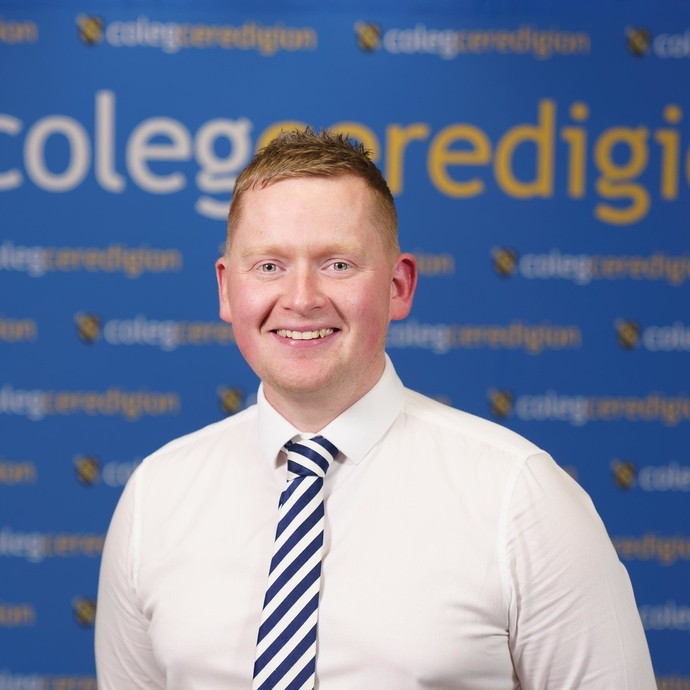
-
My passion for skills competitions comes from my own experience as a student, representing my college in competitions.
I know first-hand the confidence, pride and opportunities it created for me, and I wanted to give that same experience to the learners I now teach.
Skills competitions allow me to push learners beyond the qualification. In the classroom we teach competence, but in competitions we develop excellence. Learners are challenged to work under pressure, interpret complex drawings, manage time, solve problems independently and refine their workmanship to the highest standard.
As a lecturer, it is incredibly rewarding to see learners realise what they are truly capable of when they are stretched and supported.
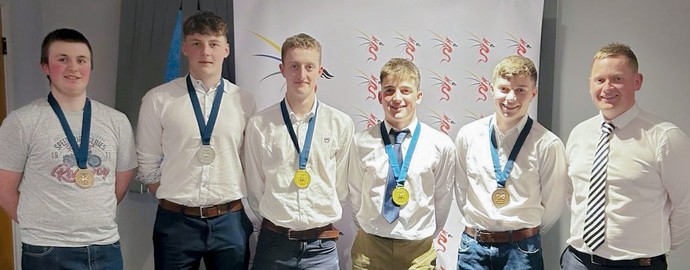
![Students at the Senedd in their branded grey jackets with lecturers Rhodri and Huw]()
Can you describe a couple of examples of the kind of transformations you’ve seen in students before and after their skills journey?
I have seen learners start their skills journey with low confidence, limited belief in their ability, and a mindset of ‘just get the qualification’.By the end, those same learners are confident, motivated, resilient and proud of their trade. Some learners who were quiet in class become leaders in the workshop. Others who struggled with pressure learn how to stay calm, reset, and push forward. Many become eager to learn beyond the syllabus, asking deeper questions and wanting to improve every detail of their work. The transformation is not just in their skills, but in their attitude, professionalism and self-belief.
What is the proudest moment you’ve had that did or didn’t involve a medal?
While winning two gold medals in 2022 for joinery and carpentry in the UK final was an incredible achievement, my proudest moments are seeing learners grow as people. Watching a learner overcome self-doubt, recover from a mistake, or finish a competition knowing they gave everything is more important than any medal. Seeing learners go on to employment with confidence, supported by local companies who sponsor them with tools and vouchers, shows that the impact goes far beyond the competition. It proves the value of teamwork between the college, employers and learners.
![Twm (medallist) in a shirt and tie holding up his medal with Inspiring Skills branding behind him]()
What is the reality of the work that goes on behind the scenes?
Behind every medal are countless hours of training. This includes reading and interpreting plans, repeating processes until they are mastered, solving problems, managing time, and learning to work under pressure. Learners often remake components several times to improve accuracy. We analyse mistakes, adjust techniques, and try again. We focus heavily on critical thinking, stress management and time control. It is not unusual for learners to stay late, return early, and push themselves far beyond normal expectations. This dedication is what creates both the results and the personal growth.
What do you say to someone who is doubting themselves?
I remind them that this feeling is normal. We talk about the fact that in a three-day competition, everyone has at least one bad day. What matters is how you respond to it. We break down what went wrong, identify what can be controlled, and focus on the next task. I encourage them to trust their training, reset mentally, and move forward. I remind them that the competition is about learning, growth and resilience, not perfection. Most importantly, I help them remember why they started and how far they have already come.


-
I don’t use the term ‘competition’ with my students, I prefer using ‘training opportunity’ to help encourage people to take part because essentially, it is an excellent training ground to hone professional skills and those skills that industry is looking for.
I’ve been mentoring skills competitors for around eight or nine years now during my 17 years at the college.
I always encourage my students to strive to do their very best because if you’re not giving your best, you’re not really giving enough.
Competitions are more than they appear, they also identify areas where students need to develop their skills, put more work into certain skills - this means progression and an opportunity to develop.
How do competitions help students?
I find that people use their problem-solving skills better in a more intense situation, you have to work your way of it logically and without panic, it’s all part of logical thinking which is essential in engineering.
It also teaches communication skills because if a competitor finds they get stuck on something, they can ask for help to move them forward. They won’t get marks for that part but they will learn how to tackle the problem.
The competitions have evolved even more since I’ve been involved and we have now moved to CAD and additive manufacturing where we’ll not only be designing and modelling but 3D printing what we design.
I also teach skills in how to stay calm as getting stressed just leads to making mistakes from clouded judgement.
![A student wearing a rubix cube themed suit holding a gold medal]()
What kind of level of competition have you been involved with?
Both Welsh and UK competitions involving both our further education full-time learners and our higher level HNC learners. More recently, students have won bronze and gold awards in the Welsh heats including automation.
I encourage all our learner to be passionate about a skills pathway and this year we’ve encouraged nearly 50 students to enlist and start their competition journey and I’m really looking forward to seeing where this takes us.
We also hosted a Manufacturing Team Challenge at our engineering training facility which brought together students to work in welding, industrial electronics and metal work to produce a drag cart.
It’s not just me that’s responsible for learners’ progression and success, we have a whole team of engineers fuelling their development.
How do you develop student skills?
I try and actively do things that help to improve student development and experience. I’m passionate about their success and for me they get that from experiencing what competitions can offer.
We offer students free CAD at home to practice too and use of classrooms and equipment during free periods. Laptops are also issued to those who don’t have PCs.
We also take up opportunities as they come up such as free CNC training at Swansea University.
All I want is for students to enjoy it with no pressure to get a medal. Just preparing and taking part helps them to return much stronger and you can see how much they change and learn.
Is there a lot of commitment outside of college working hours?
Absolutely. We’ve been everywhere for training and competition work including Scotland, Doncaster, West Wales, Cheshire and Manchester.
We trained at Doncaster University during a half-term on one occasion and like to travel with the students as I enjoy being part of their journey and it alleviates their stress.
This support mechanism is important; having to travel on their own and not having any support is something I wouldn’t want anyone to experience, their wellbeing is very important to us.
There are also lots of late finishes and events to attend surrounding the competitions, so you have to be passionate and believe in what you’re doing as a mentor.


-
Having competed myself for many years, skills competitions played a huge role in shaping both my standards and my mindset. I know firsthand how transformative that journey can be. Taking on competing students feels like giving back to something that gave me so much.
What I get from being involved is the intensity and personal growth. In the classroom, you teach a group. With skills competitions, you coach an individual. You work on mindset, resilience, discipline, and self-belief alongside technical ability. It’s about raising standards beyond “pass” or “merit” - it’s about excellence. Watching a student realise they are capable of more than they thought possible is incredibly rewarding.
![lecturer helping a catering student to grill a kebab]()
Can you describe an example of the kind of transformations you’ve seen in students before and after their skills journey?
I’ve seen students arrive with very little confidence — sometimes technically capable, but unsure of themselves and hesitant under pressure. Through structured training, repetition, and honest feedback, they begin to carry themselves differently.
By the end of their journey, they’re more composed, more articulate, and far more self-aware. Their attention to detail sharpens, their time management improves, and they start thinking like professionals.
What is the proudest moment you’ve had that did or didn’t involve a medal?
Of course, medals are fantastic — but some of my proudest moments haven’t involved silverware at all. One of the most rewarding moments is seeing a student handle pressure calmly on competition day, regardless of the result.
When a student finishes, stands tall, and knows they gave everything, that’s success. Watching them shake judges’ hands with confidence and maturity is often more powerful than the medal itself. Growth outweighs trophies.
![A competitor pointing to a promotional banner with the competition category name]()
What does it take to prepare for a competition?
Preparation goes far beyond the competition day. It’s early mornings before college, late evenings refining one garnish repeatedly, weekends practising full timed runthroughs, and constant evaluation.
It involves rewriting menus, costing dishes, refining knife skills, and sometimes stripping a dish back to rebuild it entirely. where resilience is built. It’s controlled pressure, repetition, and small improvements every session that lead to big results.
What do you say to someone who is doubting themselves?
I remind them that nerves mean they care - and caring is a strength. Doubt is normal, especially when standards are high.
I often say, “You are more prepared than you feel”. We focus on the things we can control — the prep, the timings, their mindset. I encourage them to trust their training and remember how far they’ve already come. One bad run-through doesn’t define them. Growth comes from pushing through those wobbles, not avoiding them.
![Some of Sam's competitors on a steps holding the Welsh flag]()


-
The skills competitions give me a buzz and excitement that you don’t get from your everyday work. It allows those learners that want to excel and push themselves to a much higher standard, to be able to work towards a brief and demonstrate their commitment and passion for the industry and their educational and career development journey.
Can you describe an example of the kind of transformations you’ve seen in students before and after their skills journey?
All of our past competitors strive for excellence and even if they haven’t achieved a medal, they all want to compete again and keep fighting for a gold, silver, bronze or highly commendable achievement. It is this transformation that I enjoy seeing, the competitive hunger to have another go and keep trying. They embrace judges’ feedback and hang on to every recommendation for improvement in their next competition.
What is the proudest moment you’ve had that did or didn’t involve a medal?
When competing in the UK skills competitions last year, I entered four competitors in the entry round and all four received excellent feedback and proceeded to the regional round. One of the competitors had withdrawn herself due to personal reasons, however the three that competed at the regional round in Cardiff in June 2025 all excelled and became finalists in the national final in November 2025. To have all three of my competitors in the final out of hundreds of students who had entered back in April 2025, I felt incredibly proud. The hard work and dedication that these competitors had shown, to be three out of eight competitors in the final, all from a further education college in west Wales.
![Three competitors in uniform and with Wales hoodies with skills branding behind]()
What is the reality of the work that goes on behind the scenes?
In the beauty department, this looks like suitcases and kits all over the salon, we can’t see our desks over all the towels and products we need to pack to take with us. We have uniforms hung up to be hemmed and ironed and shoes waiting to be polished. For the last four years I have given up half of the easter holidays to prepare video entries for the UK skills competitions, the salon must be empty and quiet as well as pestering our caretaker to give the salon a coat of paint to make sure these videos are perfect. During the preparation for the national finals, all competitors had left the college and were in employment, so arranging to meet all three for training was impossible, the only day we could all make it was a Sunday. This was no day of rest for us.
What do you say to someone who is doubting themselves?
If a competitor is feeling nervous or doubting their abilities or preparation for the competition, I always tell them that to be competing and putting themselves in that room and trying their best is an achievement in itself. Nerves are good and that feeling in their tummy is great, it means that they want to do well and they care about their achievements. I always tell them to forget everyone else and do exactly what they have been practicing. No other competitor will be carrying out their treatments in exactly the same way and it just might be them that shine in that room and show excellence to the judges.
![Elara with her medal Elara did really well in competitions]()

